

What Is the Difference Between FCL and LCL Shipping?
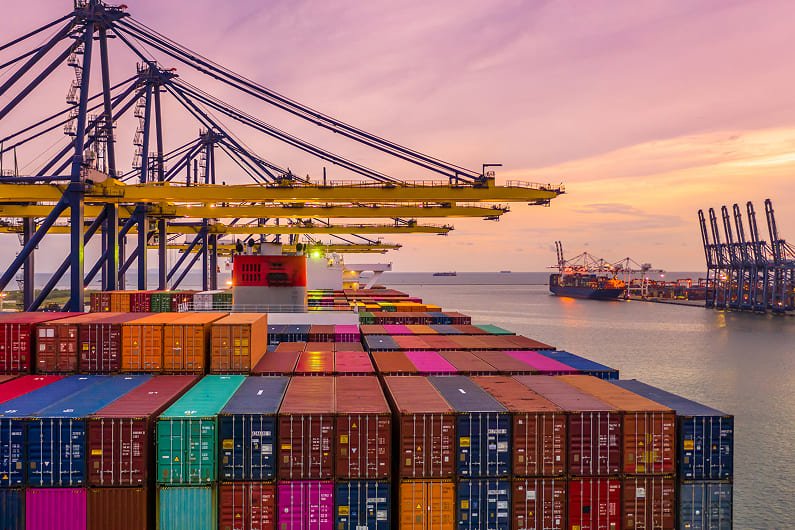
Difference Between FCL and LCL Shipping
When businesses ship goods internationally by sea, one of the first decisions they need to make is whether to choose FCL or LCL shipping.
Both are widely used methods of ocean freight, but they work differently.
FCL means Full Container Load, where one shipper books the use of an entire container.
LCL means Less than Container Load, where cargo from multiple shippers is consolidated into one container.
Choosing between them is not simply about how much cargo you have. The decision can also affect shipping cost, handling, transit time, cargo security and overall logistics planning.
So, what is the difference between FCL and LCL shipping, and which option is better for your business?
Let’s look at the key differences.
What Is FCL Shipping?
FCL stands for Full Container Load.
With FCL shipping, a business books an entire shipping container for its cargo. The container is dedicated to that shipment, even if the cargo does not physically fill every available space.
Common FCL container options include:
- 20ft standard container
- 40ft standard container
- 40ft High Cube container
- Specialised containers for specific cargo requirements
FCL is commonly used for larger shipments, high-volume cargo and goods that benefit from fewer handling points.
The container is generally loaded for one shipper and remains sealed during the main transportation journey.
What Is LCL Shipping?
LCL stands for Less than Container Load.
LCL is designed for shipments that do not require an entire container.
Instead, cargo from multiple businesses is consolidated into the same container. The shipper generally pays according to the space or volume used rather than paying for an entire container.
For example, if your business has several pallets of goods but not enough cargo to justify a full 20ft container, LCL can provide a way to move the shipment by sea without booking the entire container.
Maersk describes LCL as a service where multiple shippers share container space and charges are based on the space used, commonly measured in cubic metres (CBM).
FCL vs LCL: The Main Difference
The easiest way to understand the difference is:
FCL = One shipper uses the container.
LCL = Multiple shippers share the container.
But there are several other differences worth considering.
| Factor | FCL Shipping | LCL Shipping |
|---|---|---|
| Container use | Dedicated to one shipper | Shared by multiple shippers |
| Pricing | Usually charged per container | Usually based on cargo volume/space |
| Ideal for | Larger shipments | Smaller shipments |
| Cargo handling | Generally fewer handling points | Consolidation and deconsolidation required |
| Space | Entire container | Only required space |
| Flexibility | Suitable for larger cargo volumes | Suitable for smaller or irregular shipments |
| Security | Cargo remains in a dedicated container | Cargo shares container space |
| Cost advantage | Often better at higher volumes | Often better for smaller shipments |
Actual pricing and transit arrangements vary by route, carrier and shipment requirements. Maersk also notes that the better choice depends on the cargo and that FCL can become more economical as shipment volume increases.
How Is FCL Shipping Charged?
FCL is generally priced at the container level.
For example, the quotation may be based on:
- 20ft container
- 40ft container
- 40ft High Cube
- Origin and destination
- Shipping line
- Route
- Applicable surcharges
- Port and handling charges
Whether the container is completely full or partially filled, the business generally pays for the booked container rather than individual cubic metres.
This can make FCL attractive when the shipment occupies a substantial portion of the available container space.
How Is LCL Shipping Charged?
LCL is generally priced according to the amount of cargo space used.
The calculation may consider:
- Cargo volume
- Weight
- Number of packages
- Origin
- Destination
- Handling
- Consolidation
- Documentation
- Applicable local charges
Because businesses are not paying for an entire container, LCL can be a practical option for smaller shipments.
However, the total cost should always be compared carefully because LCL can involve additional handling and consolidation charges.
Which Is Cheaper: FCL or LCL?
There is no universal answer.
For a small shipment, LCL can be more economical because you pay for the space your cargo uses rather than reserving an entire container.
As the shipment becomes larger, FCL may become more cost-effective.
For example, if your cargo occupies most of a container, paying for LCL space plus consolidation and handling charges may not provide the best value compared with booking an entire container.
The exact break-even point varies by route, carrier and current freight rates.
This is why it is better to compare actual quotations for both options rather than assuming one is always cheaper.
Which Is Faster: FCL or LCL?
FCL can often provide a simpler transportation flow because the cargo does not need to be consolidated with other shipments at origin and deconsolidated at destination.
LCL involves additional consolidation and deconsolidation processes, which can introduce additional handling stages.
However, actual transit time depends on the route, carrier, sailing schedule, transshipment arrangements, port operations and other logistics factors.
Therefore, businesses should request route-specific transit information rather than assuming that one option will always be faster.
Maersk notes that FCL can offer faster transit in some circumstances because there are fewer handling and consolidation stages.
Which Is Safer for Cargo?
Both FCL and LCL can be suitable for international cargo when properly packed and handled.
However, FCL provides a dedicated container for one shipper, which generally means fewer cargo handling and consolidation points.
This can be beneficial for:
- Fragile goods
- High-value cargo
- Sensitive commercial shipments
- Large machinery
- Goods that need dedicated container space
LCL involves cargo belonging to multiple shippers sharing container space, so consolidation and deconsolidation are part of the process.
For sensitive cargo, businesses should discuss packaging, handling and transportation requirements with their freight forwarder before choosing the shipping method.
When Should You Choose FCL?
FCL may be a good option when:
- Your cargo occupies a large portion of a container.
- You have regular high-volume shipments.
- Your cargo requires dedicated container space.
- You want fewer cargo handling points.
- Your shipment is high-value or sensitive.
- Transit time is an important consideration.
- You want greater control over the container.
FCL is not limited to containers that are completely full. A business may choose FCL because the benefits of dedicated container use make sense even when some space remains unused.
When Should You Choose LCL?
LCL may be more suitable when:
- Your cargo volume is relatively small.
- You do not need an entire container.
- You want to ship smaller quantities more frequently.
- You are testing a new international market.
- You want to avoid waiting until you have enough cargo to fill a container.
For growing businesses, LCL can provide flexibility while shipment volumes are still developing. Maersk specifically highlights LCL as an option for smaller or irregular shipments and businesses that want to ship without waiting to fill a container.
FCL vs LCL for Small Businesses
Small and medium-sized businesses often need to balance logistics costs with inventory requirements.
Suppose a company imports products from Dubai to India but only needs a few pallets at a time.
Booking a complete container may leave a significant amount of unused space.
In this situation, LCL could allow the business to move smaller quantities according to demand.
As the business grows and shipment volumes increase, switching to FCL may become more economical and operationally efficient.
This makes FCL and LCL less of a permanent choice and more of a logistics decision that can change as your business grows.
Can You Use FCL or LCL for International Routes?
Both FCL and LCL are used across international trade routes, subject to service availability.
For example, businesses may use these services for cargo moving between:
- UAE and India
- UAE and Oman
- UAE and Saudi Arabia
- GCC and Europe
- India and GCC
- Asia and the Middle East
- Other international trade corridors
The availability, schedules, pricing and destination options depend on the carrier and freight forwarding network.
What Information Does a Freight Forwarder Need?
To recommend FCL or LCL, a freight forwarder will usually need information such as:
- Cargo description
- Number of packages
- Total weight
- Dimensions
- Total volume
- Pickup location
- Origin port
- Destination port
- Preferred shipping date
- Final delivery location
Accurate information helps the logistics provider compare available options and prepare a more appropriate quotation.
FCL or LCL: Which One Should You Choose?
There is no single answer for every shipment.
A simple way to think about it is:
Choose FCL when:
Your cargo volume is large, you need dedicated container space or you want fewer handling stages.
Choose LCL when:
Your cargo volume is smaller and you do not need an entire container.
The decision should consider cost, volume, cargo type, urgency, handling requirements and destination.
A freight forwarder can compare the available options based on your specific shipment rather than relying on a general rule.
Why Freight Forwarding Support Matters
Choosing between FCL and LCL is only one part of international shipping.
A freight forwarding partner can also help coordinate:
- Container booking
- Cargo pickup
- Sea freight
- Documentation
- Customs clearance
- Port handling
- Warehousing
- Inland transportation
- Final delivery
- Shipment tracking
Having these stages properly coordinated can help businesses avoid unnecessary delays and make better logistics decisions.
Nahra Logistics & Trading Company
At Nahra Logistics & Trading Company, we support importers and exporters with international freight forwarding and supply chain solutions.
Our services include FCL and LCL sea freight, air freight, land transportation, customs clearance, import and export solutions, cargo packaging, warehousing, distribution and door-to-door delivery.
We understand that every shipment is different.
The right shipping method depends on the cargo, volume, destination, delivery requirements and business priorities.
Whether you need a dedicated container or space for a smaller shipment, our logistics team can help you evaluate the available transportation options.
Final Thoughts
So, what is the difference between FCL and LCL shipping?
FCL gives one shipper dedicated use of a container, while LCL allows multiple shippers to share container space.
FCL is generally better suited to larger-volume shipments, dedicated cargo and situations where fewer handling stages are preferred.
LCL is generally suitable for smaller shipments where booking an entire container would not be practical.
Neither option is automatically better.
The right choice depends on your cargo volume, budget, urgency, cargo characteristics and destination.
Before booking, compare the complete cost and service scope of both options. A good freight forwarding partner can help you determine whether FCL or LCL makes more sense for your particular shipment.
Nahra Logistics & Trading Company — connecting businesses to global markets through practical and efficient international logistics solutions.
About The Nahra logistics & trading
Nahra Logistics & Trading provides reliable freight forwarding, customs clearance, warehousing, and supply chain solutions, ensuring safe and timely cargo movement across domestic and international markets.