

How Much Cargo Can a 20ft Container Hold?
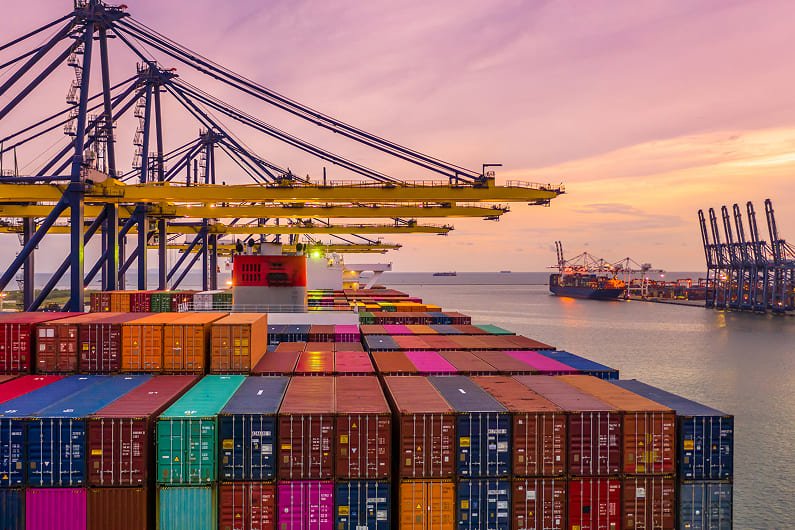
How Much Cargo Can a 20ft Container Hold?
A standard 20ft dry container provides approximately 33 cubic metres of internal volume and typically has a maximum gross weight of around 30,480 kg, although the exact rating can vary depending on the container and shipping line. The actual cargo payload is lower because the container itself has its own tare weight.
However, container capacity is not simply about filling every available cubic metre or reaching the maximum weight.
The type of cargo, packaging, dimensions, weight distribution, loading method and applicable road and port regulations all need to be considered.
For businesses planning FCL shipping, understanding these limits can help avoid overloading, wasted space and unexpected logistics problems.
What Is the Capacity of a Standard 20ft Container?
A standard 20ft dry container generally has approximately:
- External length: 20 feet
- External width: 8 feet
- External height: 8 feet 6 inches
- Internal volume: approximately 33 m³
- Internal length: approximately 5.9 m
- Internal width: approximately 2.35 m
- Internal height: approximately 2.39 m
Exact dimensions can differ slightly depending on the container manufacturer and equipment specification.
The container’s maximum gross weight includes both the cargo and the container itself.
Therefore, the maximum cargo weight is calculated approximately as:
Maximum Gross Weight − Tare Weight = Maximum Payload
For example, if a container has a gross weight rating of 30,480 kg and a tare weight of approximately 2,200–2,400 kg, the available payload may be around 28,000 kg, subject to the container’s actual specification and applicable regulations.
Always check the container’s CSC plate and the shipping line’s requirements before loading.
How Much Weight Can a 20ft Container Carry?
A standard 20ft container can often accommodate a payload of roughly 28 tonnes, but the exact permissible payload depends on the container specification.
This distinction is important.
There are three different figures to understand:
1. Tare Weight
This is the weight of the empty container.
2. Cargo Payload
This is the weight of the goods placed inside the container.
3. Maximum Gross Weight
This is the combined weight of:
Container + Cargo
For example:
2,300 kg container + 28,000 kg cargo = 30,300 kg gross weight
If the container’s maximum gross weight is 30,480 kg, this would remain within that particular rating.
However, the shipping line, port, road authority or destination country may impose additional restrictions.
How Much Volume Can a 20ft Container Hold?
A standard 20ft dry container has approximately 33 m³ of internal cubic capacity.
However, businesses should not assume they can always use 33 m³ of cargo space.
The practical loading capacity can be lower because of:
- Packaging
- Pallets
- Cartons
- Cargo shape
- Loading gaps
- Weight distribution
- Dunnage
- Securing equipment
- Access requirements
For example, irregularly shaped machinery may use much more physical space than its simple volume calculation suggests.
This is why logistics planning should consider both CBM and actual cargo dimensions.
How Many Pallets Fit in a 20ft Container?
The number of pallets depends on:
- Pallet dimensions
- Pallet orientation
- Cargo height
- Pallet weight
- Loading method
- Whether pallets can be stacked
A 20ft container may accommodate around 10 standard Euro pallets in one common loading configuration, while the number can vary for other pallet sizes and arrangements.
For standard pallets, businesses should provide the exact pallet dimensions to their freight forwarder before finalising the loading plan.
A simple pallet count is not enough to determine whether the cargo will fit.
How Many Cartons Can Fit in a 20ft Container?
There is no universal number of cartons.
It depends on the dimensions of each carton.
For example, 1,000 small cartons may occupy considerably less space than 500 large cartons.
A proper calculation should consider:
Carton Length × Carton Width × Carton Height × Number of Cartons
This provides the approximate cubic volume.
The weight of the cartons must then be checked separately.
A shipment can be within the volume limit but exceed the permitted payload.
Weight vs Volume: Which One Limits the Shipment?
This is one of the most important concepts in container planning.
Some cargo is weight-sensitive.
For example:
- Metal products
- Machinery
- Building materials
- Industrial components
- Certain raw materials
These products can reach the maximum payload before the container is physically full.
Other cargo is volume-sensitive.
For example:
- Furniture
- Garments
- Packaging materials
- Lightweight consumer products
- Plastic products
These goods may fill the container’s available space before reaching its maximum weight.
Therefore:
Heavy cargo → Weight may be the limiting factor.
Light, bulky cargo → Volume may be the limiting factor.
Can a 20ft Container Carry 28 Tonnes?
Potentially, yes, depending on the specific container’s payload rating and the applicable transport regulations.
However, 28 tonnes should not be treated as a universal safe loading figure.
The actual allowable payload depends on:
- Container tare weight
- Maximum gross weight
- Container condition
- Shipping line requirements
- Port restrictions
- Road weight restrictions
- Country-specific regulations
- Cargo distribution
For cargo approaching the maximum permissible weight, businesses should confirm the limits with their shipping line or freight forwarder before loading.
What Happens If a Container Is Overloaded?
Overloading a container can create serious operational and safety problems.
Potential consequences include:
- Container rejection
- Additional charges
- Loading delays
- Difficulty moving the container by road
- Port or terminal restrictions
- Safety risks
- Requirement to remove or redistribute cargo
- Shipment delays
Cargo should always be loaded according to the container’s certified capacity and applicable transport regulations.
The weight should also be distributed appropriately across the container floor.
How Should Heavy Cargo Be Loaded?
Heavy cargo requires careful planning.
The weight should be distributed as evenly as practical rather than concentrated in one small area.
For machinery and other dense cargo, businesses may need:
- Proper blocking
- Bracing
- Dunnage
- Lashing
- Weight distribution planning
- Suitable loading equipment
The exact method depends on the cargo.
For very heavy machinery or unusual dimensions, a standard dry container may not be the appropriate equipment.
Is a 20ft Container Better for Heavy Cargo?
Often, a 20ft container can be a practical choice for dense or heavy cargo because it has substantial payload capacity without the additional internal volume of a 40ft container.
For example, if a business is shipping heavy machinery that occupies relatively little space but has significant weight, a 20ft container may be more appropriate than a 40ft container.
However, the decision should consider:
- Total cargo weight
- Dimensions
- Centre of gravity
- Loading method
- Container floor limitations
- Destination regulations
- Carrier requirements
For oversized or unusually heavy cargo, specialised equipment may be necessary.
20ft vs 40ft Container Capacity
Understanding the difference between 20ft and 40ft containers can help businesses choose the right equipment.
| Feature | 20ft Container | 40ft Container |
|---|---|---|
| Approx. internal volume | 33 m³ | 67 m³ |
| Typical use | Heavy or medium-volume cargo | Higher-volume cargo |
| Best suited for | Dense/heavy goods | Bulky/lightweight goods |
| Container length | 20 ft | 40 ft |
| Payload | Depends on container specification | Depends on container specification |
The 40ft container provides approximately twice the internal volume of a 20ft container, but that does not mean it can carry twice the cargo weight.
Weight restrictions depend on the container rating and applicable regulations.
20ft Standard vs 20ft High Cube
A standard 20ft container has a height of approximately 8 feet 6 inches.
High Cube containers are generally available in 40ft and other configurations, while 20ft High Cube availability can be limited depending on the carrier and location.
If additional height is required, businesses should check equipment availability for the specific route.
Do not assume that a particular container type will be available at every origin port.
How Do You Calculate 20ft Container Capacity?
A basic volume calculation is:
Length × Width × Height = Cubic Volume
For example, if your cargo consists of cartons measuring:
0.5 m × 0.4 m × 0.3 m
Each carton occupies:
0.06 m³
If you have 400 cartons:
0.06 × 400 = 24 m³
A standard 20ft container has approximately 33 m³ of internal volume, so the cargo may appear to fit based on cubic volume.
But you must also check:
- Total cargo weight
- Carton stacking
- Pallet dimensions
- Loading gaps
- Packaging
- Container door dimensions
- Weight distribution
This is why a simple CBM calculation should be treated as an estimate rather than a final loading plan.
What Is the Door Opening of a 20ft Container?
The internal volume is not the only dimension that matters.
The cargo must physically pass through the container door.
A standard 20ft dry container generally has a door opening of approximately:
- Width: 2.34 m
- Height: 2.28 m
Exact dimensions vary by container.
For large machinery or bulky equipment, the dimensions of the cargo should be compared with the actual door opening before booking.
A product may have sufficient internal volume but still be impossible to load through the doors because of its shape or dimensions.
What Cargo Is Suitable for a 20ft Container?
A 20ft container can be suitable for a wide range of commercial goods, including:
- Machinery
- Industrial equipment
- Building materials
- Consumer goods
- Furniture
- Automotive components
- Packaged products
- General merchandise
- Raw materials
- Commercial inventory
The suitability depends on the cargo’s weight, dimensions, packaging and handling requirements.
Some products may require refrigerated, ventilated or specialised equipment.
Can Fragile Cargo Be Shipped in a 20ft Container?
Yes, provided the cargo is properly packed, secured and handled.
Fragile goods may require:
- Strong outer packaging
- Internal cushioning
- Palletisation
- Bracing
- Dunnage
- Moisture protection
- Appropriate cargo securing
The container should also be loaded to minimise unnecessary movement during transportation.
For high-value or fragile goods, businesses should discuss the cargo requirements with their freight forwarder before loading.
What Information Should You Give Your Freight Forwarder?
For accurate container planning, provide:
- Cargo description
- Number of packages
- Package dimensions
- Total weight
- Total CBM
- Pallet dimensions
- Photos, where useful
- Loading location
- Destination port
- Special handling requirements
For machinery or oversized cargo, provide the exact dimensions and weight of each piece.
This allows the logistics provider to determine whether a standard 20ft container is suitable.
How to Maximise Space in a 20ft Container
Efficient loading can help businesses reduce wasted space.
Use Suitable Packaging
Uniform cartons are generally easier to arrange than irregular packages.
Plan the Loading Pattern
Prepare a loading plan before the container arrives.
Stack Where Safe
If the cargo is suitable for stacking, vertical space can be used more efficiently.
Consider Pallet Dimensions
Using pallet sizes that work well with the container can reduce unused gaps.
Protect the Cargo
Do not sacrifice cargo safety simply to gain additional space.
A few extra cartons are not worth damaging an entire shipment.
Does the Destination Country Affect Weight Limits?
Yes.
The container’s certified maximum gross weight is only one part of the equation.
Once the container leaves the port by road, local regulations may impose additional restrictions on:
- Gross vehicle weight
- Axle weight
- Road transport
- Container weight
- Vehicle configuration
Therefore, a container that is technically within its certified maximum gross weight may still need to comply with lower road-transport limits.
This is especially important for heavy cargo.
Why Accurate Weight Declaration Matters
International container shipments require accurate cargo weight information.
For ocean freight, the Verified Gross Mass (VGM) is an important requirement.
The VGM represents the verified total gross mass of the packed container and is used for safe vessel loading.
Businesses should therefore ensure that the declared container weight is accurate and prepared according to applicable shipping requirements.
How Nahra Can Help With 20ft Container Shipping
At Nahra Logistics & Trading Company, we support importers and exporters with international freight forwarding and container shipping solutions across the GCC, India and global markets.
Our services include:
- Sea Freight
- FCL Shipping
- LCL Shipping
- Air Freight
- Land Transportation
- Customs Clearance
- Import & Export Solutions
- Cargo Packaging
- Warehousing & Distribution
- Door-to-Door Delivery
If you are unsure whether your cargo requires a 20ft or 40ft container, providing accurate cargo dimensions and weight can help our logistics team assess the most appropriate option.
The objective is to balance cargo safety, available space, weight requirements and overall transportation cost.
Final Thoughts
So, how much cargo can a 20ft container hold?
A standard 20ft dry container typically offers around 33 m³ of internal volume, while its maximum gross weight is commonly around 30,480 kg. The actual cargo payload is lower because the empty container itself has weight.
In practical terms, a 20ft container can often carry around 28 tonnes of cargo, but this should never be treated as a universal limit. The exact payload depends on the container specification, shipping line, cargo characteristics and applicable transport regulations.
For the best loading plan, consider both:
Cargo Volume + Cargo Weight
rather than focusing on either one alone.
Before booking a container, provide your freight forwarder with the cargo dimensions, total weight, number of packages and destination. This helps determine whether a 20ft container is suitable and reduces the risk of overloading or inefficient use of space.
Nahra Logistics & Trading Company — helping businesses move commercial cargo across borders with practical international freight forwarding and logistics solutions.
About The Nahra logistics & trading
Nahra Logistics & Trading provides reliable freight forwarding, customs clearance, warehousing, and supply chain solutions, ensuring safe and timely cargo movement across domestic and international markets.